A constant learning curve

One thing I’ve been thinking about lately is how this is a process of constant adjustment and learning. The way I find most of us think about it is “make a plan and follow it”, whereas it’s actually much more nuanced, and that learning curve applies to every single aspect of this. Beyond the basic questions of “which approach do I want to take in losing weight?”, here are some of the others that have cropped up in the past almost-year-now:

How long am I comfortable fasting? This is one that most fasters have to give some thought to at some point. Some people are only comfortable with time-restricted eating, aka eating within a limited time window of 6 or 8 hours (the 18:6 and 16:8 protocols, respectively). Others are good with alternating days of 24-hour fasts*. Some people are fine with full-week fasts or regular 5-day fasts. Personally, I wouldn’t suggest doing longer than 3 days/72 hours more than once per month. It just isn’t necessary. On average, three full days of fasting per week is the general aim. My personal favourite is three fasts of 42 hours per week. Sometimes I mix it up and go a little longer, especially if I’m balancing a planned indulgence of some sort (vacation, birthday, etc). But it’s not a competition. We all have to figure out what works for ourselves.

*Don’t do this every day! It will work at first, and then it will stop working as your metabolism slows and the weight starts coming back!

What does it mean for me to “eat to satisfaction”? I’m getting better at this one, but it’s still a constant learning curve. I’m still used to planning meal portions around my former, sugar-fed appetite – aka, it was much larger than it is now. As the classic saying goes, my eyes are bigger than my stomach now, and I’m still finding myself making more food than I need, and if I eat it all, I’m uncomfortably full. Now that my insulin (triggers appetite and body fat production) and leptin (triggers the sensation of fullness and gets suppressed when insulin is too high) seem to be in proper balance now, I still find myself needing to learn to listen to my body when it’s signalling that it’s full, rather than eating for enjoyment. I’m figuring out what my portions should be, not based on any empty notion of calorie counting or even macros (the only macro I really watch is carb intake), but based on the signals my body gives that I can now trust. A body which has too much insulin production going on gives untrustworthy signals! But my body is healing itself and I’m in the process of learning to trust it again.

How many attacks can my willpower withstand? This has been an interesting thing to observe in myself, and incredibly surprising for me. I’ve been a lifelong workaholic, but always thought that not really paying attention to what/how I was eating was the one area of indulgence I was allowing myself, so I felt very dubious about my own ability to exercise control in this area, as well. However, it seems I’m vastly stronger in this area than I ever realized I could be. That said, there are limits. In an earlier post, I mentioned a day at work when I was fasting and no fewer than EIGHT people offered me the free cake that was on offer in one of the lunch rooms. I’ve gotten to the point where I don’t mind being around people who are eating while I’m fasting. I actively enjoy meal planning and even cooking while fasting now, too – though the cheesy garlic bread muffins I made the other night tested that resolve sorely! That particular day at work, I was bombarded by offers of cake, a snack cart that was being wheeled around, hot chocolate that was on offer as well, and came home feeling like I’d been in a war zone all day. My resolve held, but it was emotionally exhausting. Finding out how much we can handle is part of this, because if these elements build up too much and become triggers for failure, we’ll start resenting our fasts.

What is my body now? This is a slightly different one, but has been an ongoing question for me since about a month into this. Dramatic weight loss isn’t just a change in terms of health and literal size – it’s a change in how we see ourselves. I don’t just mean that in a strictly cosmetic manner, either: it’s a question of functions gained (or regained), a change in the way certain actions feel or work, and so much more. Sometimes when I catch a glimpse of myself in a mirror, I literally don’t recognize myself. One of my newer non-scale victories is that my thighs don’t touch when I walk anymore (for the first time since my early teen years, probably!), and it changes the way walking feels. Running for a bus doesn’t make me out of breath. Sitting with my legs crossed at the knee is comfortable and easy. I have more energy overall. It’s changed the way I breathe for singing. It’s changed the positions I sleep in at night. It’s changed the way virtually every part of my body looks, and that’s an adjustment to make, too. It’s a good adjustment – but a change, nonetheless. I have never believed that the outside of myself was an accurate reflection of the inside, and while I feel that I’m beginning to look more the way I’ve always seen myself anyway, I still have these moments of seeing myself and going, “Whose legs are those? Those can’t be my legs…” It’s been a very interesting part of this whole process, and it’s not over yet, as I’m still 57 lbs away from my ultimate goal.

There are more, but I’ll leave it here for now. What are the questions you’ve found yourselves asking as you’ve gone? Leave a comment and share!

Holiday Guilt: Tis the Season!

It’s an old story: you were doing well, following your eating plan, ideally getting some fasting in there… but then the holidays hit. There was food everywhere. If your workplaces are anything like mine, there was food in the break room – somebody’s cookies, or boxes of chocolates, or – randomly – a giant platter of samosas one day. (What can I say, my coworkers are very generous with their food sharing!) There were parties and family gatherings and get-togethers with friends. And at every last one of those gatherings, there was food. LOTS of it. And so much of it was the sort you’ve been trying to avoid.

And you didn’t.

cat ate too much

You ate the stuffing and the mashed potatoes and your mom’s sugar cookies (in my case!) and a samosa from the platter and a brownie at the Christmas party and your aunt’s famous trifle and and and and and… you can easily populate the rest of the list!

Listen: it’s okay. It really is. Life is about balance: about both fasting AND feasting. The holidays are a time for feasting. I’m well aware of how difficult it is to let go and actually enjoy a food I wouldn’t normally eat, and also how darned easy it is to make that exception. There’s a balance in there, too. It isn’t meant to be all denial, though. Celebrations tend to centre around food. It’s just the way humans work. Honestly, the only aspect of fasting that I don’t enjoy is the social awkwardness of showing up at an event of some sort and refusing to eat/drink anything. For the past two weeks, I’ve been feeling a bit exasperated in terms of feeling as though I’ve done nothing but make exceptions, and yet I’ve also stoically held strong through staff parties, ignored the break room cookies, refused offers of wine and this and that. On balance, I think I’ve done pretty well. I don’t regret having partaken in Christmas food. I think that in North America at least, very few people of a similiarly-privileged background come out of the holidays feeling that they didn’t overindulge, honestly.

Again, it’s okay. But if you’re feeling a bit panicky, or that the holidays have caused you to fall off the wagon, don’t. Just because you let down your guard, or made a conscious decision to indulge, doesn’t mean that you’re forced to do the same thing forever. Every day is a new opportunity to start fresh! Rather than focusing on the foods you want to avoid, reframe it in terms of foods you want to seek out to feed yourself with. Find yourself those good, healthy fats, some delicious proteins, and leafy greens. I find a good, crisp, crunchy salad so refreshing after I’ve been eating carbs, all the better if it’s paired with a good quality olive oil, some toasted nuts, maybe some delicious cheese.

Even better than eating better? Fasting. For every indulgence, we can always balance it with a new fast. Fasting is the best possible way to reset. A 72-hour fast is long enough for a complete metabolic reset, in fact!

If you’re new to fasting, or haven’t ventured into it yet, you may have just spat out your tea in horror at that notion. It IS long: it’s three full days! But if you’re feeling sugared-out and slow and heavy, a three-day fast will get you back on track, detox you from all those carbs, and get you feeling good again! If you’d like to try it, do it like this (on any schedule – I’ll just use “Sunday” as a random day to start from):

Sunday: eat dinner at 6pm. Start fasting.

Monday: fast

Tuesday: fast

Wednesday: fast until 6pm. Eat dinner.

You can wait and launch into this on January 1st. I’ve got 90 hours on my fasting timer as we speak, with plans to end it at lunchtime on Saturday, enjoy the weekend (it’s my birthday!) and New Year’s Eve, then start another longer one come the new year. You can work in a 72-hour fast during the week if you want to get a head start on the new year, or you can wait until 2019 has officially rolled in.

If you’re new to fasting, here’s what you do:

  • drink lots of: water, tea (especially green), coffee (up to 1 tbsp of good fats per cup, to a maximum of 3 tbsp per day – includes: whipping cream (33-35%), coconut oil, MCT oil, butter. Excludes: 10% cream, milk, sugar or sweetener of any kind. Optional: cinnamon, cardamom, nutmeg, cloves.)
  • do not eat
  • on days 2 & 3: take a pinch of unprocessed rock salt 1-3 times per day. You can do it on day 1 as well, if you like. Most people prefer pink Himalayan salt for its mild flavour. This will keep your electrolytes in balance. Do NOT supplement with potassium! This is a dangerous practise and should be done only under specific medical direction. Salt will do the trick, and in a 3-day fast, this isn’t a huge concern in the first place.
  • If you get a headache, you’re probably not hydrated enough. Go ahead and take some Advil or Tylenol. If you feel nauseated, stop fasting! If you’re new to fasting, it’s normal to feel very occasionally dizzy, but if you feel actively unwell, stop fasting.

Bottom line: if you’re feasting, then enjoy it! Fasting before it or after isn’t meant to feel like a punishment for enjoying the holidays – just balance. For me personally, after four days of indulgence (within reason), I feel more than ready to fast again. Bring it on! 14 hours down, 76 to go. 🙂


How to Keto: Part II: Replace the carbs

How to Keto: Part II: Replace the carbs

In the last post, I talked about ways to eliminate carbs from a meal. Now we’re at:

Strategy 2: Replace the carbs. There are a lot of vegetables that make seriously great alternatives for the carbs we’re so used to eating. The honest truth is that most carbs themselves don’t have a ton of flavour – we enjoy them for their texture, generally, and use them as vessels for the thing which actually has the flavour. And we can still eat those. Here are a few examples:

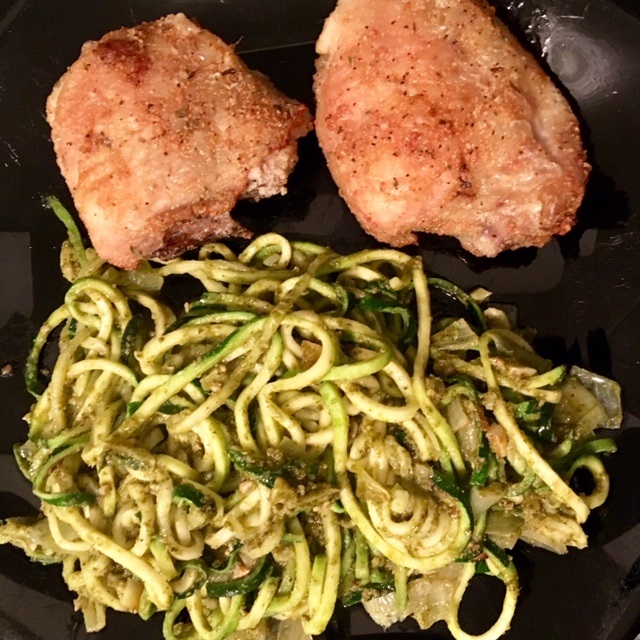
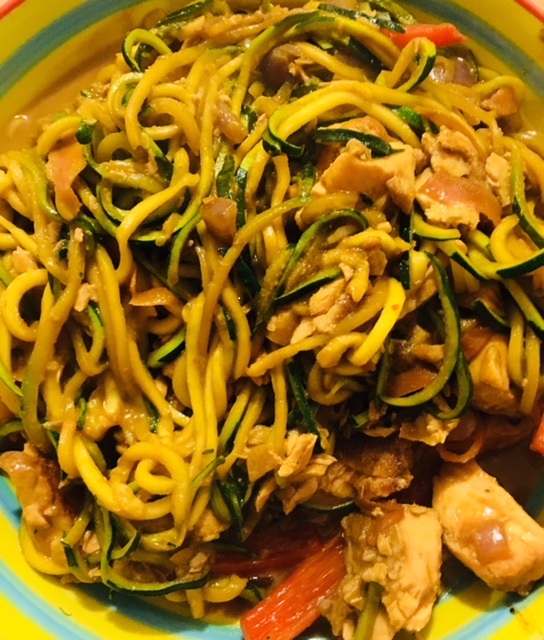
Zucchini. Get yourself a simple, hand-held spiralizer and make friends with zucchini. Zucchini is a vegetable that I was lukewarm about at best before I started this. I genuinely prefer it to pasta now. It takes me approximately 30 seconds to spiralize an entire zucchini. It has virtually no carbs in it, and you can use absolutely any (low/no sugar) sauce that you might have used on pasta or rice/potato noodles. I like to spiralize the zucchini, salt the “noodles” well and let them drain in a colander for 15-20 minutes (not at all necessary, but it can help get some of the water out which will otherwise release into the sauce, which I don’t care about for tomato-based sauces, but for cream sauces it can come in handy), then make my sauce. When the sauce is ready, toss the zucchini in and toss it for around 4 minutes, and you’re good to go. Here are a few of my go-to’s:

  • Basic marinara: ground beef grilled with fresh garlic, canned diced or crushed tomatoes, Italian herbs (oregano, basil, rosemary, thyme), parmesan cheese
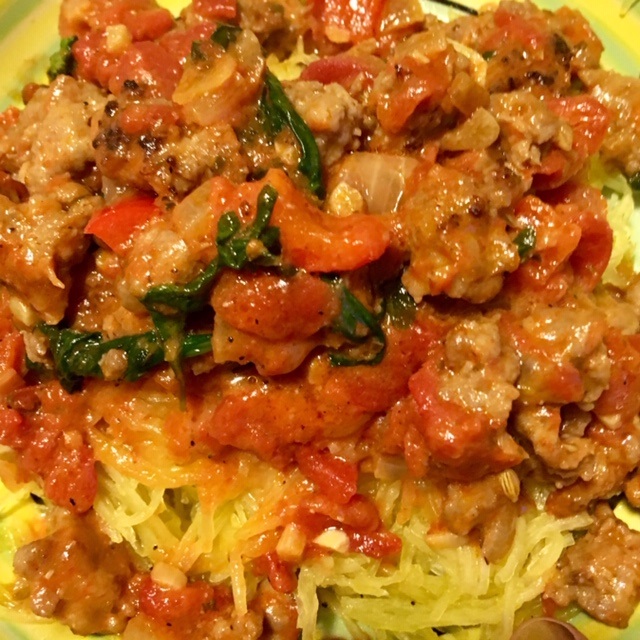
  • Italian sausage: crumbled Italian sausage grilled with fresh garlic, canned diced tomatoes, oregano, fennel seeds, lots of parmesan, fresh spinach
  • Alfredo variations: grilled garlic (optional), grilled onions (optional), grilled chicken or shrimp, whipping cream, parmesan
  • Peanut/coconut: grilled garlic, onion, red pepper, shrimp/chicken/other meat then add peanut butter (1-2 tbsp max), soy sauce, chili flakes, lime juice, coconut milk, fresh cilantro

Photo: the above sauce, with salmon

zucchini noodles thai

Photo: roasted chicken thighs with pesto zucchini noodles

Chicken thighs w pesto zucchini

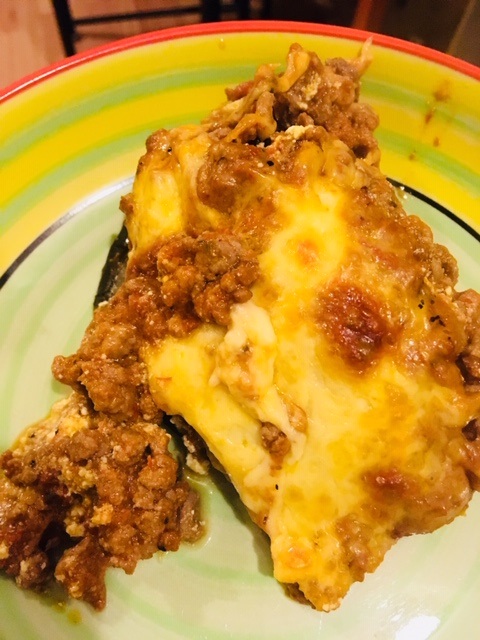
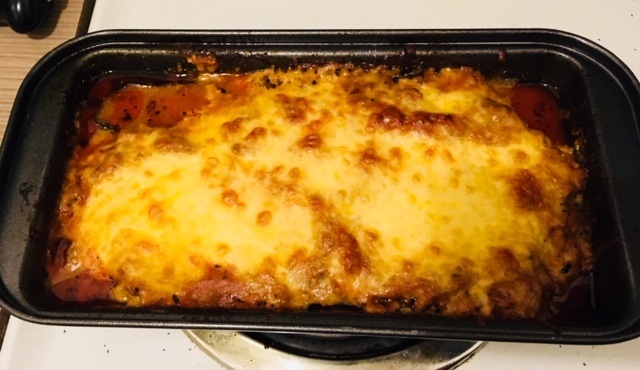
Eggplant. Both zucchini and eggplant can replace pasta in a number of ways. My favourite way to use eggplant is to substitute noodles in lasagna. Slice it in long slice about half a centimetre thick, drizzle the slices with olive oil and sea salt and roast them for about 20 minutes (turn halfway through), then layer them into a lasagna the way you would have used noodles. I’m going to try this with zucchini at some point, too, but I can’t see why it wouldn’t work. You can also use both eggplant and zucchini as “boats” to hold other things, in lieu of bread. Slice the veggie in half, hollow out the seeds, roast it as above, then dump whatever you like on it – spaghetti sauce, grilled meat, cheese, etc. I made zucchini garlic cheese “toast” like this once and it was great! There are other veggies that can work this way, too, such as spaghetti squash, which is delicious in season!

Photos: eggplant lasagna: 

Eggplant lasagna 1

Eggplant lasagna 2

Photo: the above Italian sausage sauce on spaghetti squash

Sausage spaghetti squash

Cauliflower. True fact: mashed cauliflower is better than mashed potatoes, and I say this as a major fan of mashed potatoes. Cauliflower is another veggie that holds a lot of water, so whether you’re using it as a base for a cauliflower pizza crust or anything ground, you’ll probably want to drain the water out of it after it’s been cooked (boil/steam it). For a good mash, I like to boil the cauliflower, then mash it with a potato masher or hand blender (you can use a food processer if you have one, but I don’t!), mix in cream cheese or sour cream, whipping cream, butter, cheddar, green onions, bacon, etc (aka: anything you like, pretty much!) and then bake it for a few minutes. You’ll never go back to mashed potatoes! Cauliflower can also be grated (cheese grater or food processer) to make “rice” or “couscous”. I’ve made sushi using cauliflower “rice” before and it was great!

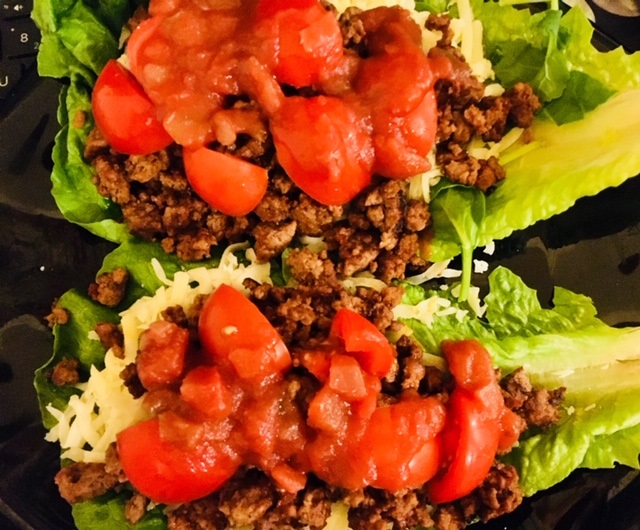
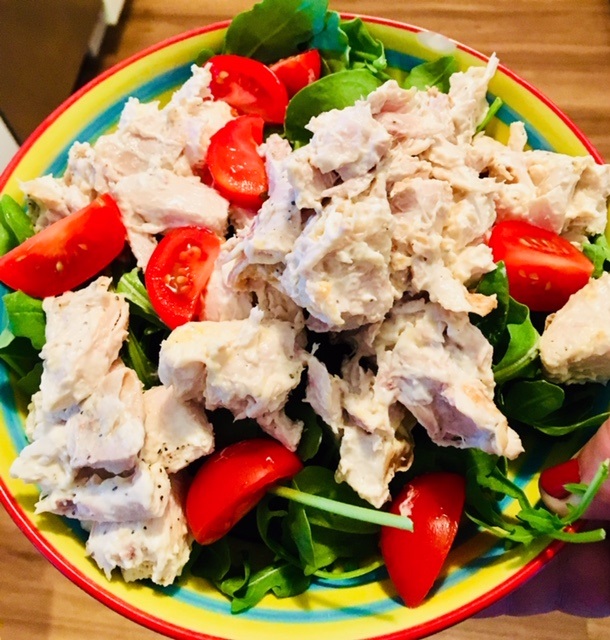
Lettuce. If you can find yourself a sturdy lettuce leaf, you’ve got an instant bread replacement. Lettuce wraps have started showing up regularly on menus, and it’s not at all uncommon for someone to request lettuce in lieu of a hamburger bun. I like making lettuce tacos, too. They’re incredibly messy, but so good. Greens can also make a great base for what you might have put into a sandwich otherwise. I love making chicken salad out of leftover rotisserie chicken, or egg salad at any time, and I still do! Now I just put them on my favourite base of mixed spinach and arugula.

Photo: lettuce tacos

Lettuce tacos

Photo: chicken salad on spinach & arugula with grape tomatoes

Chicken salad

So there you have it: a few basic ideas! This way of eating is very possible – it just requires a bit of thinking outside the bun. And taco. And tortilla. And pita. And manicotti. And – you get the drift. 🙂

How to Keto: Part 1: Eliminate the Carbs

How to Keto: Part I

On occasion when I’ve told someone that keto or low carb/high fat eating focuses on eating a lot of healthy fats, they’ll say, “okay, but you can’t just eat fat, so what do you actually do for meals?” There are two main strategies here, and I’m going to divide this into two long posts, because there are photos!

Strategy 1: Eliminate the carbs. Many meals in many cultures find their base in a carbohydrate, be that rice, pasta, or bread products. I’ve heard so many people say “I can’t do keto; I’m Italian! All we eat is pasta!”, or “I can’t do keto; I’m Indian! There’s rice in every meal!”, etc. I would argue that most cultures’ cuisines fit the bill here, whether that’s sandwiches in your lunch or nachos for a snack or popcorn at a movie or sushi with friends. Believe it or not, though, sometimes you can just take the carb element right out. The majority of my meals are essentially meat and veggies in some combination. Here are some examples of meals where you could annex the carb element:

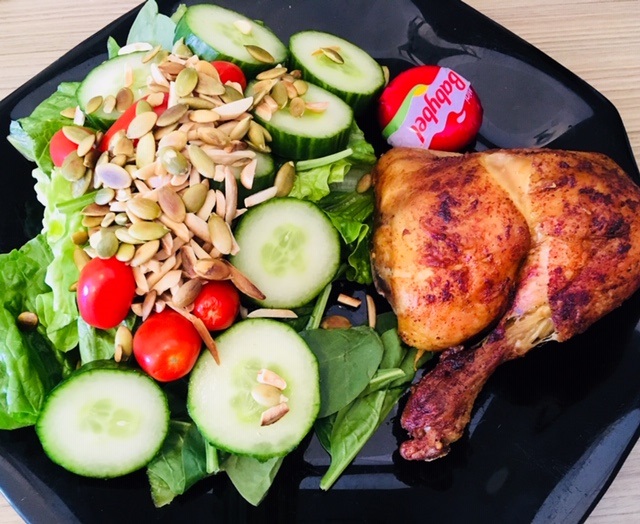
The meal: roasted chicken, broccoli, mashed potatoes. Eliminate the mashed potatoes.

Photo: rotisserie chicken leg with large salad (romaine, spinach, grape tomatoes, cucumber, toasted almonds, pumpkin seeds, homemade olive oil/white vinegar dressing), babybel gouda

Chicken leg + salad

The meal: beef vindaloo, basmati, naan, salad. Eliminate the basmati and naan.

The meal: ham and swiss sandwich, apple, hard-boiled egg. Eliminate the bread and swap out the apple for some lower-carb strawberries, and eat the ham and cheese together on their own. It sounds a little odd, but I’ve had some excellent “deli plate”-type meals that are totally satisfying – any combination of cold meats (preferably non-processed), cheese, nuts, olives, pickles, boiled eggs, and veggies makes for a great lunch!

The meal: sushi: opt for sashimi rather than rolls/sushi.

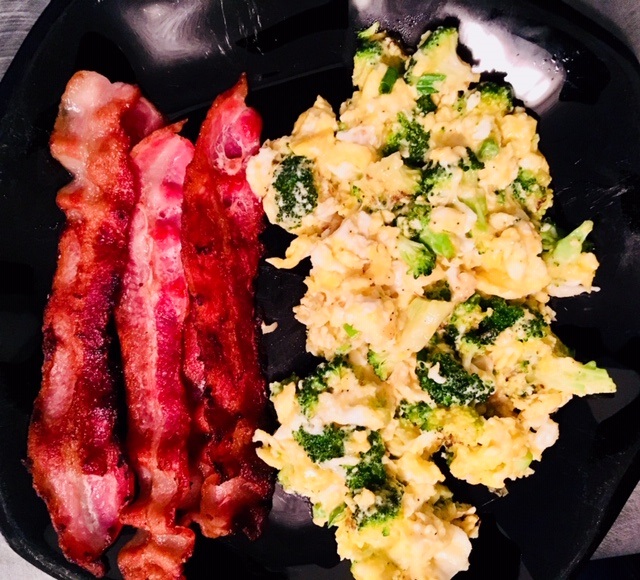
The meal: breakfast: opt for combinations of eggs, meat, veggies, and cheese rather than toast, hashbrowns, pancakes, waffles, etc.

Photo: scrambled eggs with mozzarella and broccoli, bacon. 

Scrambled eggs and bacon

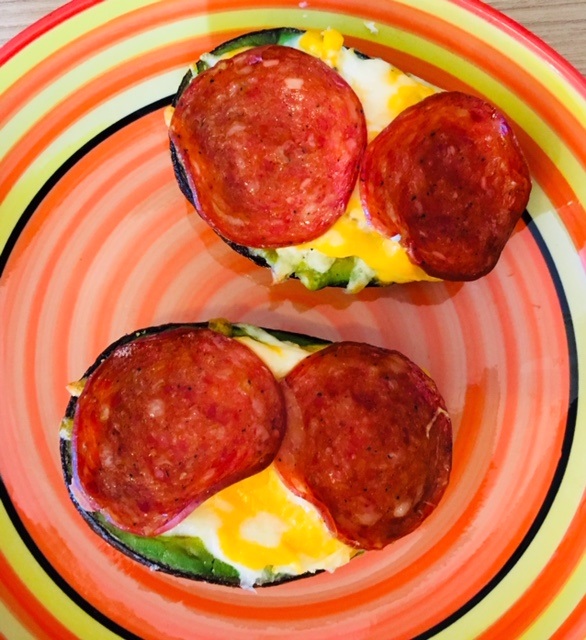
Photo: Avocado baked eggs with pepperoni

Avocado baked eggs

Photo: Frittata (broccoli, spinach, red pepper, mozzarella)

Frittata

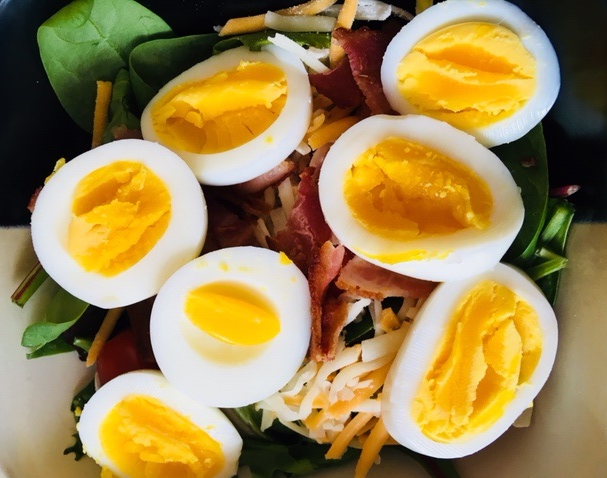
Photo: breakfast salad (spinach, sliced boiled egg, bacon, cheddar, homemade olive oil/white vinegar dressing)

Breakfast salad.png

Sometimes it’s not as easy, though. If you take the noodles out of a pasta dish, for instance, you’d likely be left with sauce, a few veggies, and maybe some meat. So then we come to the next post: Strategy 2: Replace the carbs. 

The Fear of Keto

In the past few years, following a ketogenic way of eating has become somewhat popularized. I would say that the version of it that I follow is stricter than the popular version, namely in that I’ve also eliminated sweeteners of every variety. (This whole silliness of “keto” desserts is ridiculous – if the thing is sweet, it will raise your insulin, regardless of its score on the glycemic index. It may not raise your blood sugar, but it will almost certainly still prompt an insulin response, which is exactly what I’m looking to avoid.)

Meanwhile, keto – aka, eating as few sugars/carbs as possible so as to keep your body in a state of nutritional ketosis, aka burning its fat stores to produce blood glucose rather than relying on eaten sugars – has gotten popular, and with popularity comes criticism. What amuses me is that the most common criticism of following a ketogenic way of eating unfailingly goes something like this: “Okay, it works, but as soon as you go back to your old ways of eating, you’ll regain the weight.” Yeah: no sh*t, Sherlock. Why assume that someone would go back? I’ve said this repeatedly, but this is about making a permanent change, about realizing what foods help us and which ones we can easily do without. This isn’t something that you hit hard and then relapse and hope that the positive changes that came out will stick. Life doesn’t work that way!

The second main critique that comes up over and over again goes something like: “Keto is too restrictive, which makes it impossible to sustain.” To which I say: bullshit.

What is restrictive and impossible to sustain is a low calorie diet. Anything you term a “diet”, for that matter. Low calorie and low fat nearly always come together, since fat is far more calorically dense than other foods. Fat is also the one macronutrient that doesn’t prompt an insulin response, which makes it our friend. Eating fat has nothing to do with our body’s decision to make fat from what we’ve eaten. That all comes from insulin, which is caused mostly by sugar. High fat foods are delicious. This is a fact.

Often when people begin a new way of eating, they feel a bit lost and wonder what they can “safely” eat, what follows their plan. When you look up ketogenic eating, there are a lot of lists of individual food products, such as olive oil – but olive oil doesn’t make a meal, obviously! I’m going to start posting the occasional meal that I’ve made, just to share some ideas.

Meanwhile, if you’re new to low carb/high fat/ketogenic eating and are wondering what the yays and nays are, here’s a list for you:

Eliminate: 

  • sugar in every form. Includes: table sugar, maple syrup, corn syrup, rice syrup, molasses, honey, agave, fruit juice, anything that ends with -ose (dextrose, maltose, glucose, fructose, etc), sugar alcohols (anything that ends with “tol”, including maltitol, xylitol, erythritol, etc), palm sugar, coconut sugar, etc etc etc
  • sweeteners of any other kind, whether natural (“natural”) or artificial. Includes: stevia, monkfruit extract, aspartame, acesulfame glutamate (the sweetener in Coke Zero), sucralose, etc
  • refined carbs of every kind. Includes: anything made with any type of flour (excluding almond flour and coconut flour), which includes pasta, couscous, virtually all bread products, white rice
  • beer

Eat considerably less of (think maximum once every 2-3 days):

  • vegetables that grow underground (potatoes, carrots, sweet potatoes, turnips) as well as corn and peas
  • fruit, excluding berries (blackberries, raspberries, strawberries, blueberries)
  • whole grains. Includes: brown and wild rice, oatmeal, quinoa, etc
  • legumes. Includes: chickpeas, black beans, kidney beans, peanuts (including peanut butter), etc.
  • other alcohols. Technically speaking, alcohol falls into its own macronutrient category, but is metabolized as sugar and very often stalls people’s weight loss

Seek out: 

  • meat, fish (especially fatty fish such as salmon, tuna, mackerel, trout). Dark poultry is good. Skin is fine!
  • eggs (so delicious and flexible!)
  • full fat dairy products (note: watch out for yogurt!! It nearly always contains added sugars!). Look for the highest fat percentage possible. The higher the fat, the lower the sugar! Cheese is your friend!
  • low carb vegetables. Includes: broccoli, cauliflower, spinach, arugula, kale, other lettuce-type greens, leeks, asparagus, green beans, tomatoes!
  • nuts and seeds, especially walnuts
  • healthy fats. Includes: olive oil, coconut oil, sesame oil, butter, MCT oil, avocado
  • fibre! Look for this in ground flaxseed, chia seeds, nuts
  • green tea. All tea is good (though watch out for carbs in commercial chain store teas containing fruit! Many also add sugar and other sweeteners!), but green tea is especially good. The antioxidants (catechins) can help suppress appetite and are full of vitamin C!
  • vinegar and fermented foods (pickles, etc). Vinegar is a natural offset to sugars and can help metabolize them better

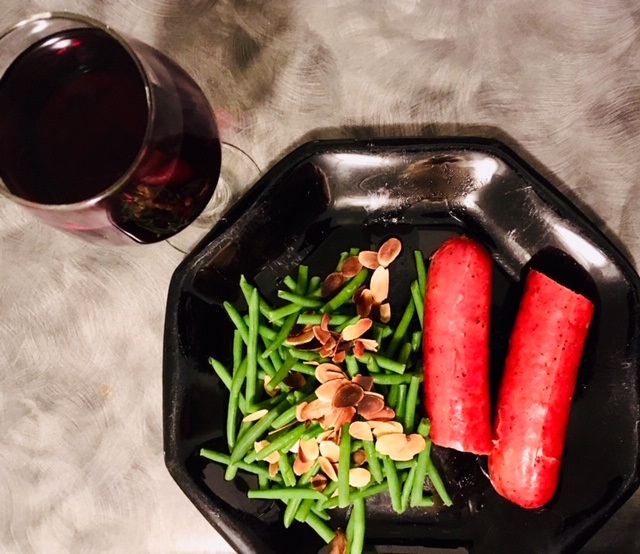
So again, you say, “so what can I actually eat for a meal??” Here’s a basic answer: meat and veggies. Just eliminate the carb element that I, at least, once felt was so crucial. I’ll be posting the occasional meal pic/idea/recipe, but let me start off with what I had for dinner today: farmer sausage (a Canadian prairies staple, courtesy of the Mennonite community!) and green beans, topped with butter and toasted almond slices. I also had a rare glass of shiraz with it!

Farmer sausage and green beans

More of that to come! Stay tuned!

Sugar everywhere!

The past 36 hours or so have been a pretty massive test of my strength of will. First, I had a big solo concert yesterday afternoon, so while I have performed while fasting before and been fine, I thought I would have breakfast (bacon and eggs) and then start my fast after that. It was a busy day, with not only the concert, but also some voice lessons taught, and a second performance with a carolling quartet as well. That night at one of my workplaces, there was cake and wine on offer. I was hungry by that point, but it wasn’t very difficult to refuse it.

Today at my other workplace, I was told no less than EIGHT times by well-meaning colleagues that there was cake, again. When I went to the staffroom for my lunch (aka: green tea) break, the room was filled with people eating cake. I endured it for awhile (now in my very-hungry zone, the dread 24-30 hour stretch), then politely found somewhere else to catch up on my emails and texts, away from all the cake. When I returned to my post, some kind-hearted soul had delivered slices of that same damned cake on a tray for the staff in my area, just in case we hadn’t already been bombarded with offers of said cake.

Then, toward the end of an ungodly 12-hour shift, the restaurant on the premises, which had been catering a private function, brought out a tray of leftover appetizers – crab cakes, chicken satay, prosciutto, cheese, pickles, olives, fruit, etc – and offered it around. The rest of my colleagues dove in – and still, I gamely refused (though I did bring a bit of it home for tomorrow!).

This morning at the brief staff meeting, the gift shop staff were promoting a product, as they do every day, and today’s choice was hot chocolate mixes. Sugar is everywhere, and sometimes there is just no escaping it. I’m pretty damned proud that I held out today. While I do still crave the sweet stuff, I genuinely do find following a low carb/high fat way of eating a lot more satisfying.

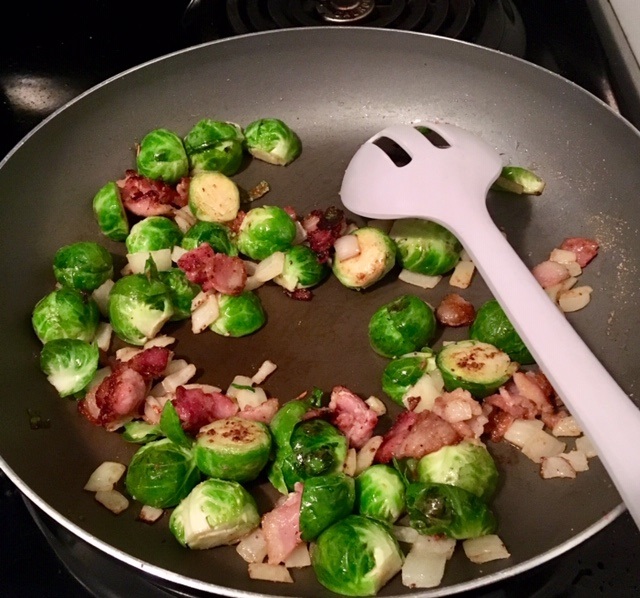
This is from Monday’s lunch, and they were delicious: Brussels sprouts cooked with bacon, butter, onions, garlic, and a dash of sea salt.

brussels sprouts

Strange how no one ever talks excitedly about there being free Brussels sprouts on offer in the staff lunch room, though! 😛

120 lbs down, 15 to go!

First, welcome to my new blog! I’m leaving up my former blog over at Naked with Life, but it had come to my attention that people were leaving comments and I wasn’t getting them. There were other issues as well, so here we are, trying out this platform!

As of today, I’ve now lost 120 lbs, which puts me just 15 lbs off the original target I set for myself 10.5 months ago. It’s honestly gone so much faster than I thought it would! I added another 50 lbs onto my goal for after I’ve reached this one, so in total, I still have 65 lbs to go, but I’m feeling good! I keep on shrinking out of my clothes, which is a good problem to have, yet a bit of a pricey one… I’ll be glad to reach target and enter maintenance mode, that’s for sure! Meanwhile, this is good!

Meanwhile, I have more and more people asking my advice about fasting and ketogenic eating. If you’re curious and haven’t ask yet, go right ahead – I’m happy to share advice just any time. 🙂


Design a site like this with WordPress.com
Get started